What Is Drug Addiction and Signs of Drug Addiction?
Drug addiction, or substance use disorder, is kind of a chronic disease where a person ends up losing control with using drugs even when there are harmful consequences. It messes with the brain’s reward system ,so stopping becomes really hard without professional help or guidance.
Getting an early diagnosis, identifying these signs of drug addiction, and starting treatment sooner can truly raise the odds of a successful recovery.
Common Drug Addiction Symptoms
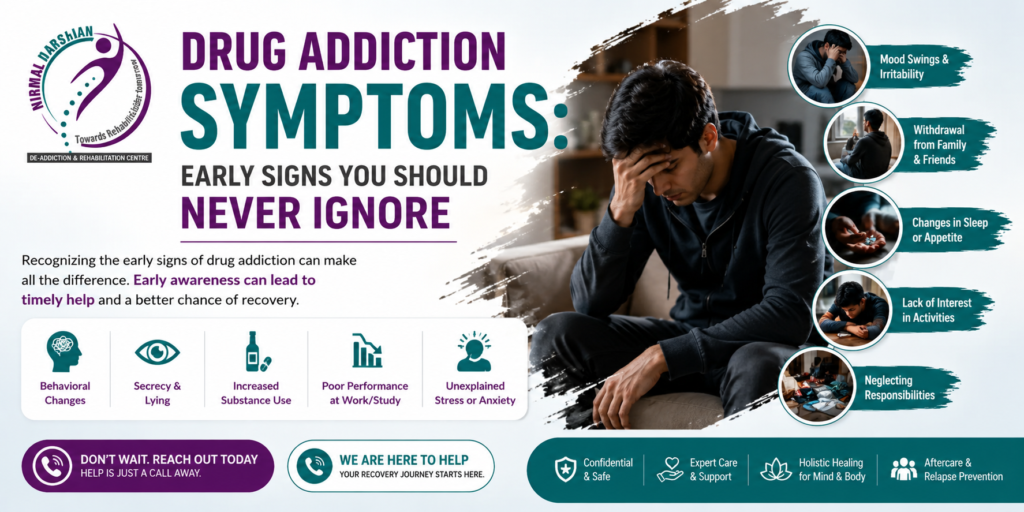
Recognizing the signs of addiction early can save lives. Here are some of the most common symptoms:
1. Sudden Changes in Behavior
People struggling with addiction often become secretive, withdrawn, or aggressive. They may lose interest in hobbies, family activities, or responsibilities.
Warning Signs:
-
- Mood swings
-
- Irritability
-
- Social isolation
-
- Increased secrecy
2. Physical Health Changes
Drug abuse affects the body in many ways.
Common physical symptoms include:
-
- Bloodshot eyes
-
- Sudden weight loss or gain
-
- Poor hygiene
-
- Frequent nosebleeds
-
- Slurred speech
-
- Tremors
-
- Constant fatigue
3. Declining Performance at Work or School
One of the earliest signs is poor performance in daily responsibilities.
This may include:
-
- Missing deadlines
-
- Frequent absenteeism
-
- Poor concentration
-
- Falling grades
-
- Loss of motivation
4. Financial Problems
Drug addiction often leads to unexpected financial issues.
Examples include:
-
- Borrowing money frequently
-
- Selling personal belongings
-
- Unexplained expenses
-
- Stealing money
5. Changes in Sleep Patterns
Drug use can disrupt normal sleeping habits.
Symptoms include:
-
- Sleeping too much
-
- Insomnia
-
- Staying awake for long periods
-
- Constant tiredness
Emotional Symptoms of Drug Addiction
Besides physical symptoms, addiction also affects emotional well-being.
Common emotional signs include:
-
- Depression
-
- Anxiety
-
- Panic attacks
-
- Low self-esteem
-
- Mood instability
-
- Lack of motivation
Long-Term Effects of Drug Addiction
If left untreated, drug addiction can lead to severe health complications.
These include:
-
- Liver damage
-
- Heart disease
-
- Brain damage
-
- Kidney problems
-
- Mental health disorders
-
- Memory loss
-
- Relationship breakdown
-
- Financial instability
-
- Legal issues
When Should You Seek Professional Help?
If you start seeing a bunch of symptoms going on for a few weeks, then it really matters that you reach out for professional support right away. I mean, don’t wait around too long. Early intervention can provide:
-
- Safer “detox” support
-
- Guided counseling with a specialist
-
- Medical oversight throughout
-
- A lower chance of relapse
-
- More solid long-term recovery results
Treatment Options for Drug Addiction
Recovery can happen, if the treatment plan is right, kind of. The plan might include medical detoxification, individual counseling, group therapy and yes family counseling too. You may also see behavioral therapy, relapse prevention programs, and aftercare support.
Each plan really should be tailored , around the person specific needs and not just the usual stuff.
Tips to Prevent Drug Addiction
You can reduce the risk of addiction by:
-
- Avoiding recreational drug use
-
- Managing stress in healthy ways
-
- Seeking help for mental health concerns
-
- Building a strong support system
-
- Learning about the risks of substance abuse
Conclusion
Noticing drug addiction symptoms early on can really help, even if it seems small at first. Changes in behavior, troubles with physical health, emotional instability, plus withdrawal symptoms should not be brushed aside. If someone gets help sooner, it can make a major difference in the whole recovery path. Sometimes the person seems ok for a while, then suddenly the signs stack up, and that s when it’s harder, but still possible to turn things around. Reaching out for professional treatment at the right moment can help people get back control of their lives and build long-term recovery.
So if you or someone close to you is showing signs of drug addiction, don’t wait around. Get early support, and get professional care too. That kind of timely help can open the door to a more stable life, one that moves toward a healthier, addiction-free future.
FAQs
1. What are the first signs of drug addiction?
Early signs include mood swings, changes in sleep patterns, poor hygiene, declining performance at work or school, and withdrawal from family and friends.
2. Can drug addiction be cured?
Drug addiction is a chronic condition, but with proper treatment, counseling, and ongoing support, people can achieve long-term recovery.
3. What causes drug addiction?
Common causes include genetics, mental health disorders, peer pressure, trauma, stress, and prolonged use of addictive substances.
4. When should someone seek treatment for drug addiction?
Professional help should be sought as soon as multiple symptoms appear or when drug use begins affecting health, relationships, work, or daily life.
5. Is professional rehabilitation necessary?
Many individuals benefit from professional rehabilitation because it provides medical care, counseling, relapse prevention, and long-term recovery support.
6. How does family support help in managing signs of drug addiction?
Family support plays a vital role in identifying common signs of drug addiction early and motivating individuals to begin professional treatment. Constant encouragement, healthy communication, and clinical guidance help patients overcome withdrawal challenges and sustain lifelong recovery.
7. Can early intervention prevent severe addiction complications?
Yes, recognizing the primary signs of drug addiction early and seeking specialized clinical assistance prevents long-term neurobiological and psychological damage. Professional rehabilitation therapies, supervised medical detoxification, and structured coping strategies provide patients with the essential resources required for full emotional stabilization and long-lasting recovery.
Reaching Out for Help:
If you or someone close to you is showing persistent signs of drug addiction, professional rehabilitation offers structured medical detox, behavioral therapy, and compassionate care to rebuild a healthy, substance-free future.
Holistic Approaches in Managing Addiction:
Modern rehabilitation focuses on treating both the physical dependency and the underlying psychological factors of substance use. Therapeutic interventions such as Cognitive Behavioral Therapy (CBT), motivational interviewing, and group support sessions empower patients to develop robust coping mechanisms against everyday stressors.
Creating a Strong Relapse Prevention Plan:
A sustainable recovery journey relies heavily on structured aftercare planning. Developing personalized routines, learning stress management, avoiding familiar relapse triggers, and engaging in supportive community groups build long-term resilience. With dedicated medical oversight, sustained counseling, and compassionate family support, complete recovery is attainable.